The Flavors of Neurotransmitters
Different neurotransmitters do different jobs. They fall into three functional categories that map directly onto the drug classes in this course.
Excitatory: Glutamate
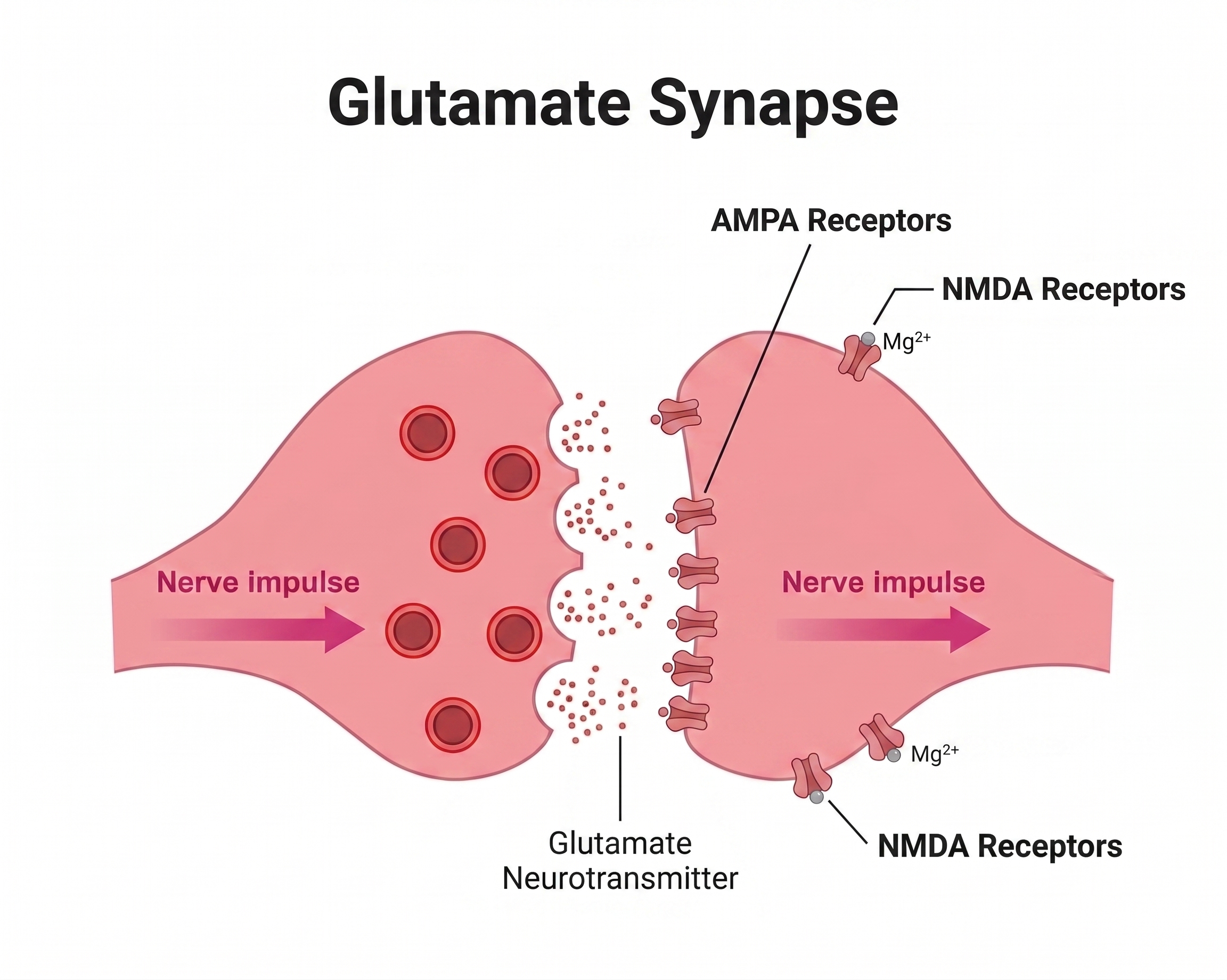
Video: Glutamate Synapse - click to expand ↗ YouTube
Glutamate is the brain's main excitatory neurotransmitter.
Roughly half of all brain synapses use it. When glutamate binds its receptors, sodium and/or calcium flow into the receiving neuron → the neuron becomes more likely to fire.
Two main receptor types matter:
- AMPA receptors - fast. Open sodium channels. Carry the moment-to-moment excitatory signal.
- NMDA receptors - slow and special. Glutamate-gated and voltage-gated. At rest, a magnesium ion blocks the channel pore. Only when the cell is already partially depolarized does Mg²⁺ pop out, letting Ca²⁺ in. This dual requirement makes NMDA the cellular basis of long-term potentiation (LTP). Blocking NMDA impairs the formation of new declarative memories - it is one major mechanism of memory encoding, though not the only one.
- Kainate receptors (less used, worth noting) - sit mostly on presynaptic terminals and fine-tune how much neurotransmitter a synapse releases. A modulatory role - no fast excitatory drive like AMPA, no learning gate like NMDA.
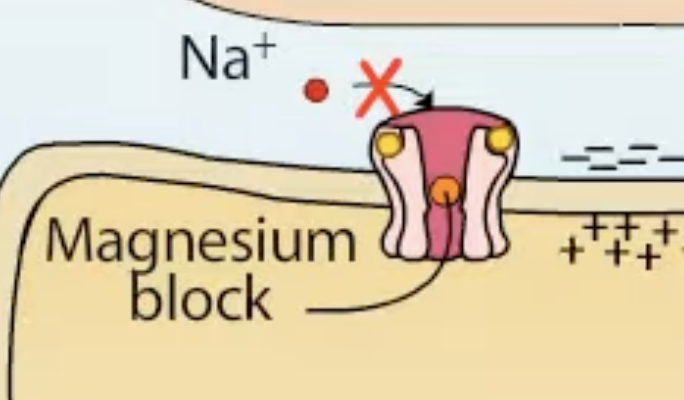
Video: AMPA and NMDA Receptors (in depth) - click to expand ↗ YouTube
Targeted by: dissociatives (ketamine, DXM, PCP, nitrous oxide) which physically plug the NMDA channel; alcohol (antagonizes NMDA as a side mechanism); inhalants.
Inhibitory: GABA (the Brake)
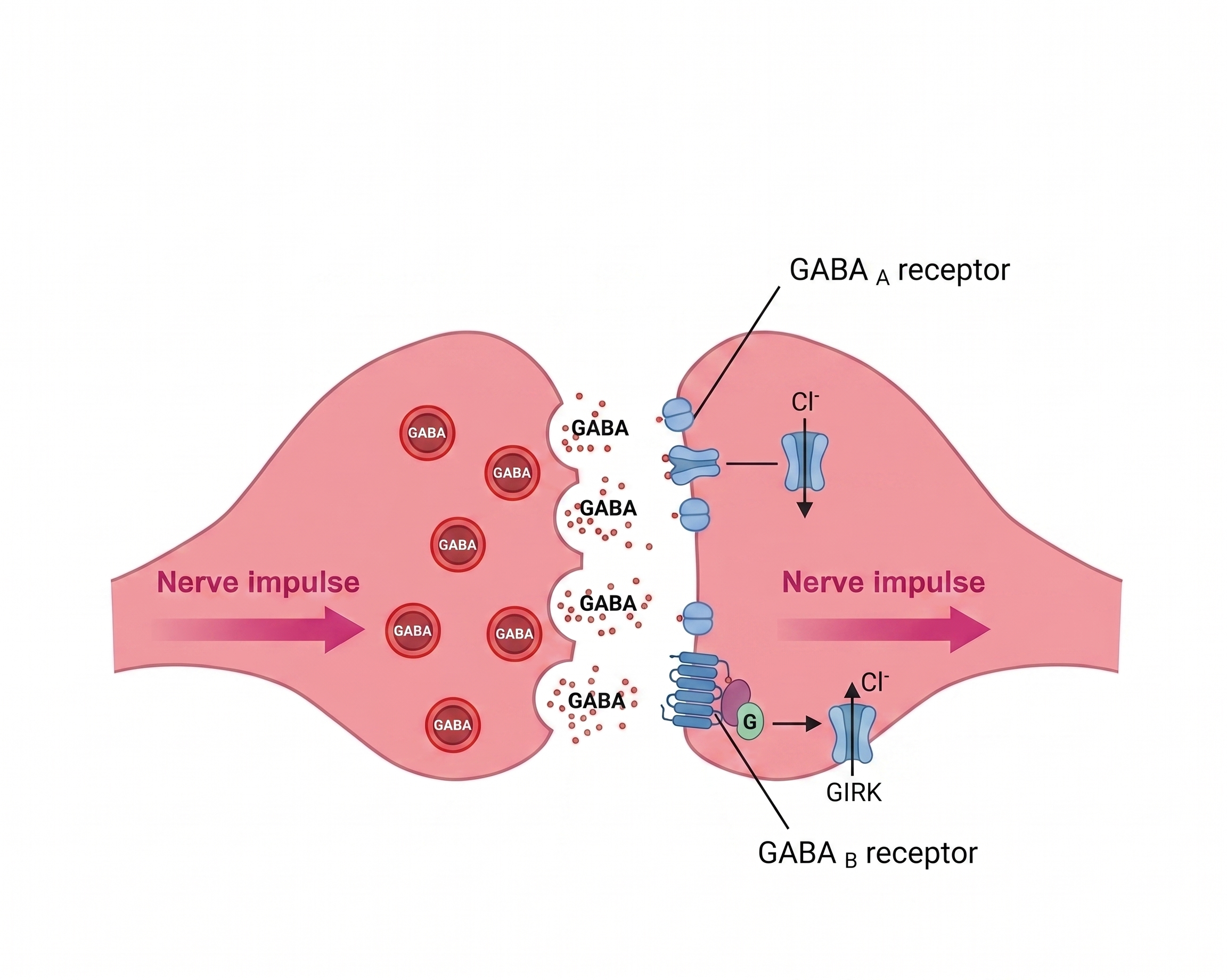
GABA is the brain's main inhibitory neurotransmitter.
Roughly 20–40% of brain synapses are GABAergic. When GABA binds its receptors, chloride flows in (or potassium flows out) → the neuron becomes harder to fire.
Two main receptor types matter:
- GABA-A - fast. A chloride channel. When GABA binds, Cl⁻ rushes in → hyperpolarization. This is the receptor targeted by most depressants.
- GABA-B - slow. G-protein coupled. Opens K⁺ channels and closes Ca²⁺ channels. Same end result (less firing) through different machinery.
GABA is everywhere: cortex, amygdala, brainstem, motor circuits, reward circuits. This is why depressants affect almost every brain function.
Targeted by: all depressants. Benzodiazepines, alcohol, barbiturates, Z-drugs (GABA-A). GHB, phenibut, baclofen (GABA-B). Inhalants (GABA-A).
Video: GABA Synapse - click to expand ↗ YouTube
Modulators: The Monoamines
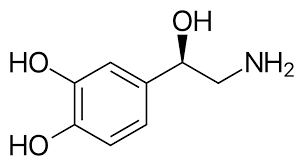
The monoamines are a family of neurotransmitters that share a chemical backbone and act as modulators of brain state rather than fast on/off signals. They don't directly drive firing - they adjust how circuits respond to other signals. They affect: mood, arousal, motivation, focus, etc.
More in-depth coverage of specific monoamines in their corresponding modules.
-
Dopamine - signals "this was worth doing, do it again." → Module 5
- Released in small, controlled bursts during natural rewards (food, sex, accomplishment).
- Activated by most addictive drugs.
- Acts through D1–D5 receptors, all G-protein coupled.
-
Norepinephrine (noradrenaline) - signals "wake up, focus, this matters." → Module 5
- Drives arousal, alertness, and the fight-or-flight response.
- Acts through α and β adrenergic receptors.
-
Serotonin (5-HT) - regulates mood, social behavior, fear processing, body temperature, and water balance. → Module 7
- Acts through at least 14 receptor subtypes (5-HT1A through 5-HT7), each doing different jobs in different brain regions.
- Acetylcholine (ACh) - the brain's signal for attention, arousal, and learning; also the neurotransmitter at the neuromuscular junction. Covered in depth in Module 5a: Nicotine and Module 7c: Deliriants.
The Transporter Feature
The monoamines are unusual in that they have transporters that remove them from the synapse after release:
- DAT (dopamine transporter)
- NET (norepinephrine transporter)
- SERT (serotonin transporter)
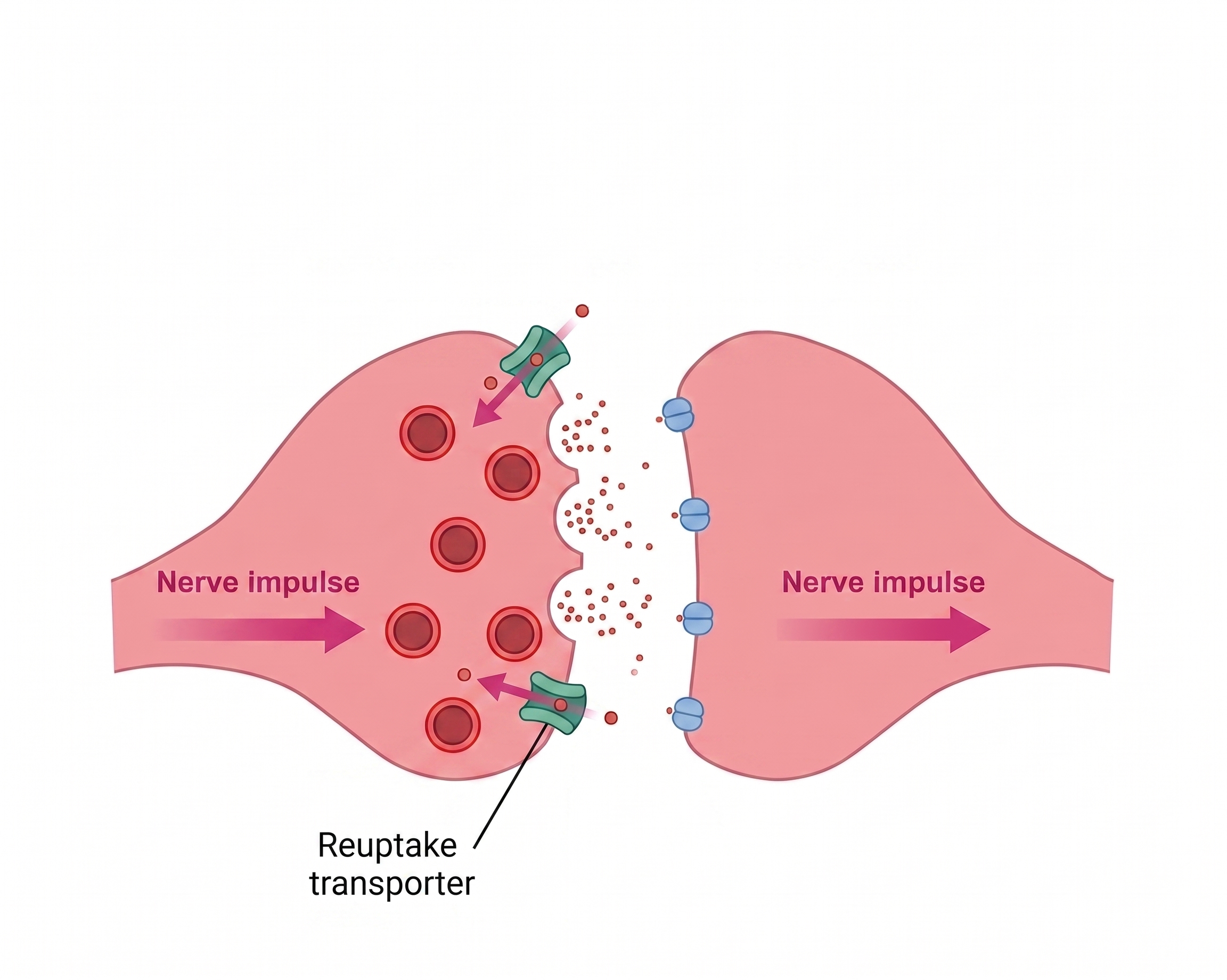
These transporters are the most-drugged targets in psychiatry and recreational pharmacology. Stimulants block or reverse them. SSRIs plug them. MDMA forces them into reverse.
Targeted by: stimulants (DAT, NET), MDMA (SERT primarily), SSRIs (SERT), antipsychotics (D2 blockers), psychedelics (5-HT2A agonists).
The Effect / Side Effect
Drugs work by affecting something in this synapse loop. The four basic points of intervention:
- At the sender - force the cell to release more neurotransmitter than it normally would (amphetamines force dopamine release; MDMA forces serotonin release).
- At the receptors - direct binding - bind receptors directly, mimicking the neurotransmitter (opioids hit MOR; nicotine hits nAChR; psychedelics hit 5-HT2A) or blocking them (antipsychotics block D2; deliriants block muscarinic ACh).
- At the receptors - allosteric modulation - modulate how the receptor responds without binding the active site directly (benzos at GABA-A; CBD at CB1).
- At cleanup - block the reuptake transporters that normally clear the chemical from the synapse (cocaine blocks DAT; SSRIs block SERT; methylphenidate blocks DAT/NET).
User Manual
This module is the foundation for every drug class that follows. Where a drug intervenes (sender, receptor, or cleanup) determines its effect, its side effects, and its addiction profile.
The vocabulary from this module appears in every subsequent module. Sodium, potassium, chloride, calcium, cAMP, glutamate, GABA, dopamine, norepinephrine, serotonin. These are the building blocks. The drug modules just describe which building block each drug grabs, where in the brain it grabs it, and what happens when that signal gets altered.
Every drug in this course fits into one of those four intervention types. Keep that framework in mind as you go through each module.
Sources
- Dr. Medic. (n.d.). AMPA and NMDA receptors [Video]. YouTube. https://www.youtube.com/watch?v=8-m_J2CnYho
- Neuroscientifically Challenged. (n.d.). 2-Minute neuroscience: GABA [Video]. YouTube. https://youtu.be/bQIU2KDtHTI?t=28
- Neuroscientifically Challenged. (n.d.). 2-Minute neuroscience: Glutamate [Video]. YouTube. https://youtu.be/29QfkTjIWHU?t=25